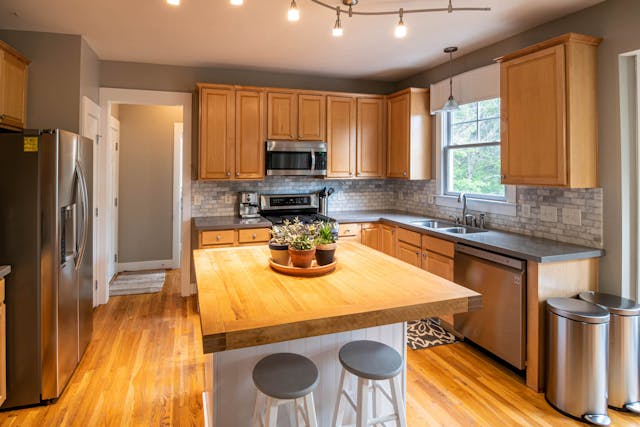
A bright, modern kitchen featuring warm wood cabinetry and clean, minimalist finishes.
Photo Source: Pexels
For anyone who enjoys hosting friends and family, the kitchen is more than a place to cook. It becomes a gathering space, a serving station, and often the heart of the home. A well-designed kitchen layout makes hosting feel effortless, allowing you to prepare meals, interact with guests, and keep things moving without stress. Whether you host large dinners or casual get togethers, the right layout choices can make a noticeable difference in how comfortable and functional the space feels.
An Open Flow That Encourages Connection
One of the most important features for a host-friendly kitchen is an open, intuitive flow. When guests naturally gravitate toward the kitchen, the layout should support conversation rather than create bottlenecks. Open sightlines to dining or living areas make it easier to stay engaged while cooking or plating food.
Clear pathways between key zones, such as the sink, cooktop, refrigerator, and serving areas, help prevent crowding. This is especially important during gatherings when multiple people may be moving through the space. An open layout allows guests to feel welcome while still giving the host room to work efficiently.
Islands And Peninsulas That Do Double Duty
A kitchen island or peninsula can be a hosting powerhouse when designed thoughtfully. These features create a natural gathering point where guests can sit, snack, or chat without interfering with food preparation. For hosts, they provide valuable counter space for prep, buffet-style serving, or drinks.
The most effective islands balance size and function. Too small, and they limit usability. Too large, and they can disrupt traffic flow. Seating on one side with prep space on the other helps define roles and keeps the workspace organized. Homes designed with hosting in mind often position kitchen islands to serve as both a prep hub and a comfortable gathering spot, an approach seen in Kindred Homes that helps hosts stay connected to guests while cooking.
Storage That Supports Entertaining
Hosting often means pulling out extra dishes, glassware, serving platters, and small appliances. A kitchen designed for entertaining includes storage that makes these items easy to access. Deep drawers, pull out shelves, and dedicated cabinets for serving pieces reduce the need to search or stack items awkwardly.
Pantry placement also matters. A pantry near prep areas allows quick access to ingredients, while one closer to the kitchen entry can help guests assist without getting underfoot. When storage is intuitive, hosting feels smoother and more enjoyable.
Thoughtful Appliance Placement
Appliance placement plays a major role in how well a kitchen functions during gatherings. The refrigerator should be accessible without forcing guests to cross through the main cooking zone. Dishwashers placed near sinks and serving areas make cleanup easier both during and after events.
Multiple ovens or flexible cooking appliances can be helpful for hosts who entertain often. Even in smaller kitchens, choosing appliances that support multitasking can make a big difference. The goal is to minimize backtracking and keep everything within easy reach when timing matters.
Lighting That Adapts to The Occasion
Lighting sets the tone for any gathering. A kitchen that relies on a single overhead light can feel harsh or flat, especially during evening events. Layered lighting allows the space to shift from functional to inviting with ease.
Task lighting under cabinets supports prep work, while pendant lights over an island add warmth and visual interest. Dimmable fixtures make it easy to adjust the mood as the evening progresses. When lighting is flexible, the kitchen feels just as welcoming during a casual brunch as it does for a dinner party.
Finishes That Balance Style and Practicality
Hosts benefit from finishes that look great and hold up well under frequent use. Durable countertops, easy to clean backsplashes, and resilient flooring reduce worry during busy gatherings. At the same time, cohesive finishes help the kitchen feel polished and intentional.
Choosing materials that age gracefully allows the space to remain attractive over time, even with frequent entertaining. A kitchen that looks good and works well encourages hosts to focus on their guests rather than on maintenance concerns.
Conclusion
A kitchen designed for hosting is built around flow, function, and flexibility. Open layouts, smart storage, thoughtful appliance placement, and adaptable lighting all work together to support effortless entertaining. When the kitchen is designed with both cooking and connection in mind, hosting becomes less about managing logistics and more about enjoying time with the people who matter most.