
“Codependent” is one of those words that often arrives with baggage. It gets tossed around in pop psychology posts, sometimes used as shorthand for clingy or needy. Yet the reality is far more complicated. Many people who show codependent traits are not weak or overly attached. They are deeply caring, tuned in to others, and motivated by connection. In the right light, these qualities can be strengths. It asks a simple question. How do you relate to the needs, feelings, and boundaries of the person you love, and how do you relate to your own? This matters because relationships thrive when both partners feel supported without feeling responsible for each other’s emotional survival.
What Codependency Actually Means
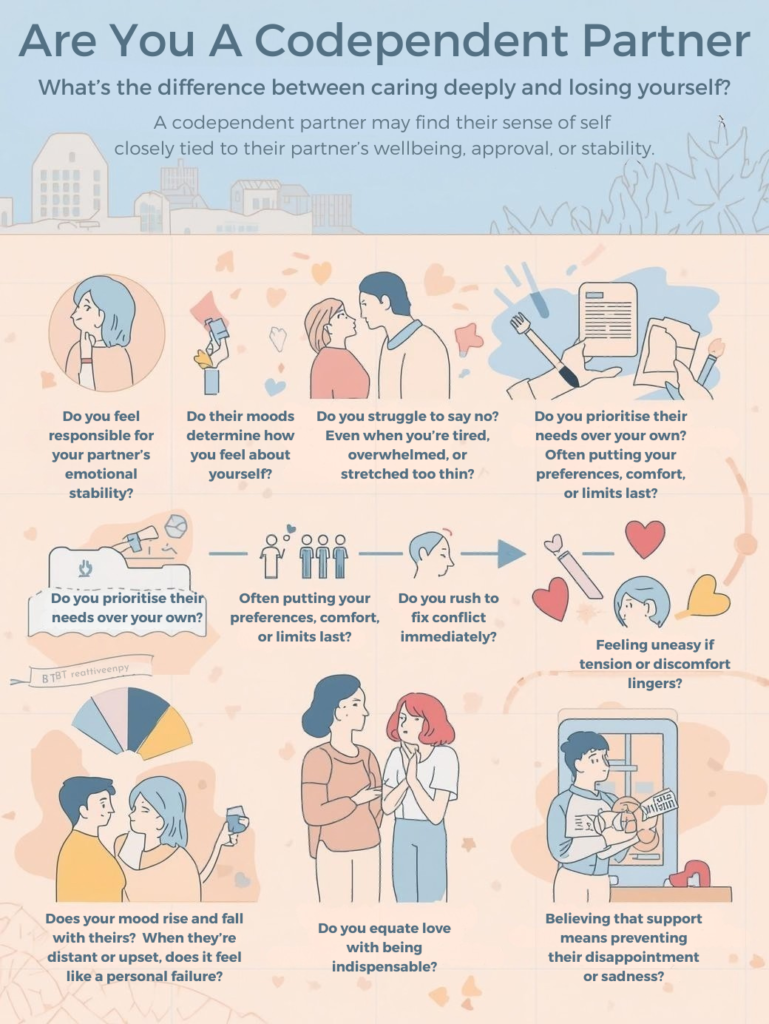
Codependency describes a pattern where someone’s sense of self becomes closely tied to another person’s wellbeing, approval, or stability. A codependent partner may feel most comfortable when helping, soothing, or fixing. Their identity can lean heavily on being needed.
This often develops gradually. A person might start by offering extra support during a stressful period. Over time, the balance shifts. One partner’s moods begin to shape the emotional climate of the relationship. The other partner’s needs quietly slide into the background. It is important to separate codependency from simple affection or loyalty. Wanting to care for someone is healthy. Feeling that you must manage their emotions, prevent their discomfort, or sacrifice your own limits is where problems can creep in.

Via Pexels
Signs You Might Recognize In Yourself
Codependent patterns are rarely obvious from the inside. They feel normal because they are driven by good intentions. Still, certain experiences tend to repeat. You may feel uneasy when your partner is upset, even when the situation has nothing to do with you. There can be a strong urge to smooth things over immediately. Waiting can feel unbearable. Saying no might bring guilt rather than relief. You might agree to things that stretch your energy, time, or comfort, then quietly resent the strain. Your mood may rise and fall with your partner’s. When they are distant, distracted, or critical, it can feel like a personal failure instead of a passing state.
The Hidden Strengths Behind Codependency
Here is the part that often gets overlooked. Codependent partners often possess remarkable empathy. They notice slight shifts in tone, energy, and behaviour. They are attentive listeners. They anticipate needs before they are spoken. These are not flaws. In healthy dynamics, empathy and responsiveness create warmth and trust. Problems arise only when care turns into over-responsibility.
Why It Matters In Real Relationships
When one partner feels responsible for maintaining harmony at all costs, pressure builds. The relationship can start to revolve around preventing conflict rather than allowing honest expression.
The codependent partner may become exhausted, though they might struggle to name why. Their efforts are endless because human emotions are endless. No one can permanently stabilise another adult.
The other partner may feel smothered, controlled, or strangely disconnected. Being constantly rescued can reduce a sense of agency. It can also create an uneven power dynamic, even when no one intends harm.
Balanced interdependence is different. Both partners care deeply. Both retain autonomy. Support flows without becoming obligation.

Via Pexels
Codependency And Boundaries
Boundaries are not walls. They are guidelines about what feels acceptable, manageable, and respectful. For someone with codependent tendencies, boundaries can feel harsh or selfish at first. In reality, boundaries protect connection. They prevent silent resentment. They allow generosity to be genuine rather than forced.
Emotional Responsibility Versus Emotional Support
One of the key shifts involves recognising emotional ownership. Each person is responsible for their feelings, reactions, and coping strategies. Partners can influence each other, but they do not control each other.
A codependent partner may confuse support with responsibility. They might believe love means ensuring their partner never feels disappointment, frustration, or sadness.
True support looks different. It allows space for uncomfortable feelings. It trusts the other person’s resilience. It offers presence rather than constant intervention. This shift can feel unsettling, especially if your sense of worth has been linked to being indispensable.
When Codependency Intersects With Difficult Situations
Codependent patterns can become particularly complicated in relationships marked by addiction, chronic illness, or instability. The caring partner may slide further into a fixer role. Their world narrows around managing crises.
In more serious contexts, blurred boundaries can also delay recognition of harmful behaviour. Someone might minimise controlling actions, emotional manipulation, or intimidation because they are focused on helping rather than evaluating the dynamic.
Seeking outside perspective can be crucial. Friends, therapists, and in severe cases domestic violence lawyers may provide clarity about what is supportive versus what is unsafe. Awareness here is about protection, not blame.
Moving Towards A Healthier Balance
Change does not require dramatic confrontation. It often begins with self-observation. Notice moments when you feel responsible for your partner’s mood. Pause before stepping in. Ask yourself whether support is needed or whether discomfort simply needs to exist for a while.
Practise expressing preferences without apology. This can feel awkward if you are used to adapting automatically. Small steps count.
Reconnect with interests, friendships, and routines that belong solely to you. A strong sense of self reduces the pull towards over-identification with another person. Therapy can also help unpack deeper beliefs about worth, safety, and attachment.
Letting Go Of The Fear Of Disconnection
Many codependent behaviours are driven by fear. Fear of conflict. Fear of rejection. Fear of being seen as uncaring. Ironically, constantly managing the relationship can create the very distance you are trying to avoid. Authentic closeness depends on honesty, not perfect harmony.
Allowing your partner to experience their full emotional range, and allowing yourself to do the same, builds trust. It signals that the relationship is sturdy enough to hold real human complexity.
Being a codependent partner is not a character flaw. It is often the expression of empathy, loyalty, and a strong desire for connection. These are valuable qualities. They simply need grounding in healthy boundaries and mutual responsibility.
In the end, the question is not whether you are codependent. It is whether your way of loving leaves room for both people to breathe, grow, and remain fully themselves. That balance is where relationships feel both safe and alive.