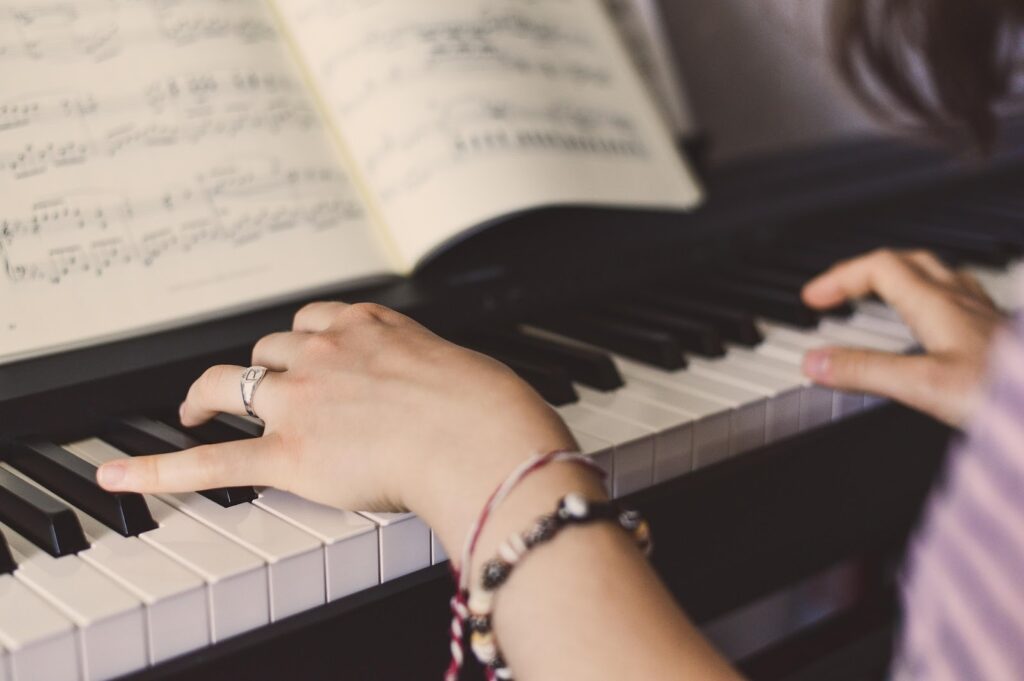
Image by wal_172619 from Pixabay
There are many ways in which you can express yourself, but not all of them will allow you to do so without using any words. Music offers you something very different.
It will give you the space where your emotions, ideas and thoughts can take shape without you needing to explain yourself. Learning the piano in particular will create a very unique connection between sound and movement.
Each note that you play will reflect not just technique, but also the feeling that you are having. Over time, this will turn into an amazing form of self-expression. It will feel both natural and deeply rewarding.
Discovering your voice through music
When you first begin to learn the piano, it may start to feel like you’re just following instructions. You are going to learn where to place your fingers, how to play simple melodies, and read notes.
At this stage, everything will feel very structured. As you continue, something will start to shift. The notes will start to feel less like rules and more like tools that you use.
You will start to recognize patterns and be able to experiment with timing. You will then develop a sense of flow. This is where expression truly begins.
You may notice that the same piece will sound very different depending on just how you play it. Slight changes in pressure, rhythm and tempo will completely alter the mood. This is how music becomes deeply personal.
Building confidence through practice
Learning the piano is not just something that will happen overnight. It also requires patience, consistency and repetition. At first, progress may seem very slow but each small improvement will build upon the last.
As you start to play confidently, that sense of progress will become very motivating. You start to realize that effort will lead to results and this type of understanding often carries into several other areas of your life.
Confidence grows not only from mastering a piece but also from knowing that you can learn, improve and adapt over time. This process can be extremely meaningful whether you are returning to learning after you’ve had a long break or you want to try something later on in your life.
Making music part of your routine
One of the most valuable aspects of learning the piano is that it can fit into your daily life in a very flexible way. You do not need hours of practice in order to see improvement. Even short consistent sessions will lead to some very noticeable progress.
This makes it very easy to incorporate music into any kind of schedule, no matter how busy it is. Whether you practice in the morning, in the evening or during a break, the routine will become something that you look forward to rather than something that you need to manage.
If you’re looking for a way to begin, doing piano lessons will provide structure and guidance while allowing you to develop your own style and pace.
A creative outlet that evolves with you
Unlike some hobbies that will feel very repetitive over time, learning the piano will continue to evolve as you grow in your skill. Once your skills improve, the range of music you can explore will expand tremendously.
You’ll move from simple melodies into much more complex pieces and eventually you’ll be able to interpret music in your own way. This type of ongoing growth will keep the experience extremely engaging for you.
There is always something new that you have to learn, whether it’s a different style, composition or even a technique. You may also find that your taste in music will change as you progress as well.
Pieces that once felt very difficult to you or even unfamiliar will become much more accessible. This will open the door to a lot of new creative possibilities.
The emotional benefits of playing
Music has a way of helping you to process your emotions and you don’t need to explain them. Sitting at the piano can become that quiet moment in your day where you’re able to release tension, focus and reflect.
Playing can often feel very calming after you’ve had a long day or it may be energizing when you need to have a mental shift. It will give you a space that is entirely your own where you can step away from a lot of distractions and be able to focus on something that is meaningful.
Over time this type of emotional connection becomes the most valuable part of learning how to play an instrument.
Learning at your own pace
One of the most encouraging aspects of playing the piano is that there is no right timeline. Some people will learn quickly while others will take a much more gradual approach. Both paths are still very valid.
What matters most is enjoyment and consistency. When you allow yourself to learn at your own pace, the experience will become more fulfilling instead of stressful. This type of flexibility is what makes the piano accessible to people at different ages and stages of life.
Whether you’re a complete beginner or you’re returning after years away, it’s always easy to find your confidence again.
A skill that stays with you
Learning piano is not simply about playing songs. It’s also about developing a skill that will stay with you for a very long time. Even if you take breaks, knowledge and muscle memory will always remain.
This makes it easy for you to return whenever you want to. This lasting value is part of what makes learning an instrument so worthwhile for many people. It will become something that you can revisit, continue to enjoy, and build on for many years to come.
Bringing creativity into everyday life
In a world that often feels very fast-paced, having a creative outlet can make a big difference. Piano offers you a way to create something, slow down and simply focus. It’s not about perfection or even performance.
It is about the process of learning, enjoying music and expressing yourself in your own special way.