
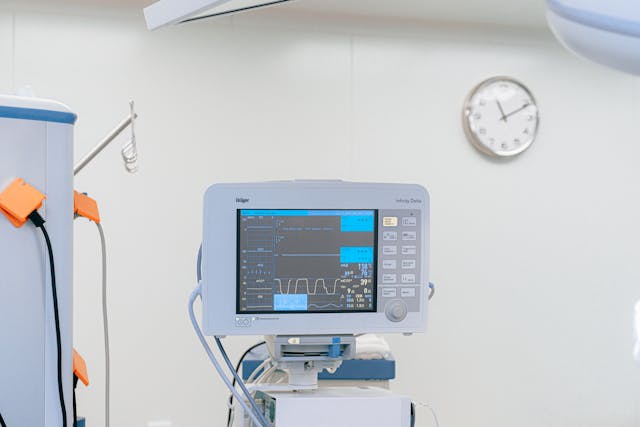
Photo from Pexels
Healthcare has changed more in the last twenty years than in the previous century combined. Technology’s fingerprints are everywhere, from the way doctors access patient information to how surgeries are performed with robotic precision. What once seemed like science fiction has become standard practice in hospitals and clinics worldwide. These advances haven’t just made healthcare faster or cheaper; they’ve fundamentally altered the relationship between patients and providers, making care more accessible, personalized, and effective.
Electronic Health Records and Digital Documentation
Remember when doctors kept patient files in manila folders stacked in dusty cabinets? Those days are long gone. Digital documentation has transformed medical record-keeping from a paper nightmare into a streamlined system where information flows freely between providers. Now, when you visit a specialist across town or land in an emergency room far from home, healthcare professionals can pull up your complete medical history in seconds. This instant access prevents dangerous medication interactions, eliminates duplicate testing, and ensures everyone on your care team is literally on the same page.
Telemedicine and Remote Patient Care
The doctor will see you now, from wherever you happen to be. Telemedicine exploded onto the healthcare scene and quickly proved it wasn’t just a temporary solution to extraordinary circumstances. Video consultations have demolished geographical barriers that once left rural patients hours away from specialized care. Why drive two hours for a fifteen-minute follow-up when a video call accomplishes the same thing? Remote monitoring devices take this concept even further, letting physicians track blood pressure, glucose levels, and heart rhythms in real-time without patients leaving their living rooms.
Advanced Diagnostic Imaging Technologies
Modern medical imaging feels like looking at the human body through a superhero’s eyes. Today’s technologies go far beyond simple X, rays, offering three-dimensional views that reveal what’s happening inside organs, vessels, and tissues with stunning clarity. MRI and CT scans can spot a tumor the size of a grain of rice, while PET scans illuminate metabolic activity that indicates disease long before symptoms appear. What’s really remarkable is how artificial intelligence now assists radiologists by flagging suspicious areas that human eyes might overlook.
Laboratory Information Systems and Automation
Behind every diagnosis sits a laboratory processing thousands of samples daily, and modern automation has transformed this critical work from painstaking manual analysis to streamlined efficiency. Automated analyzers can run hundreds of different tests simultaneously, delivering results in hours that once took days. When laboratories process tissue samples and diagnostic specimens, pathology software enables pathologists to track specimens from collection through analysis, minimizing errors and ensuring proper sample handling throughout the testing process. These systems talk directly to electronic health records, pushing results to physicians the moment they’re validated. Quality control mechanisms catch potential errors before results reach patients, while sophisticated tracking prevents the nightmare scenario of mixed-up samples. The combination of speed and accuracy means physicians can make critical decisions faster, particularly crucial when treating aggressive infections or rapidly progressing diseases.
Artificial Intelligence and Machine Learning Applications
Artificial intelligence is becoming healthcare’s secret weapon, quietly revolutionizing everything from diagnosis to hospital operations. Machine learning algorithms digest millions of patient records, clinical studies, and treatment outcomes to spot patterns invisible to human analysis. These systems can predict which patients face the highest risk of sepsis, readmission, or surgical complications, often before obvious symptoms appear. AI doesn’t replace physicians; it augments their capabilities, serving as a tireless assistant that never gets fatigued or overlooks subtle details.
Wearable Health Technology and Personal Monitoring
Your smartwatch knows more about your health than you might realize. Wearable technology has shifted healthcare from occasional checkups to continuous monitoring, turning patients into active participants in their own wellness. These devices track everything from steps and sleep patterns to heart rhythms and blood oxygen levels, creating a comprehensive health profile that updates constantly. When someone’s heart slips into an irregular rhythm, their watch can alert them and automatically notify their physician, potentially catching life-threatening conditions before symptoms become severe.
Robotic Surgery and Precision Medicine
Robotic surgical systems bring a level of precision to the operating room that human hands alone can’t match. These sophisticated platforms translate a surgeon’s movements into micro-precise actions, filtering out tremors and enabling manipulation at scales barely visible to the naked eye. Minimally invasive procedures that once seemed impossible become routine when robots can navigate through incisions smaller than a fingertip. Patients benefit from less trauma to surrounding tissues, reduced blood loss, and faster recovery times.
Genomics and Personalized Treatment Approaches
Medicine is finally acknowledging what we’ve always known: everyone’s different. Genetic sequencing technology has made truly personalized medicine possible, allowing treatments tailored to individual genetic blueprints rather than population averages. Today, sequencing a complete genome costs less than a typical emergency room visit and can reveal predispositions to everything from heart disease to specific cancer types. Pharmacogenomics takes this further by predicting how patients will respond to particular medications, eliminating dangerous trial-and-error approaches to prescribing.
Blockchain and Healthcare Data Security
Healthcare’s digital transformation created a new challenge: protecting sensitive medical information in an increasingly connected world. Blockchain technology offers an elegant solution to this modern problem. Distributed ledger systems create permanent, tamper-proof records of medical transactions while maintaining patient privacy through sophisticated encryption. Unlike traditional databases vulnerable to hacking, blockchain’s decentralized structure makes unauthorized changes virtually impossible.
Conclusion
These technological advances haven’t just improved healthcare, they’ve fundamentally reimagined what’s possible in medical care. Each innovation builds upon others, creating an interconnected ecosystem where information flows seamlessly, decisions rely on comprehensive data, and treatments target individual patient needs. Looking ahead, emerging technologies promise even more dramatic changes, from nanobots delivering drugs directly to diseased cells to quantum computers solving complex medical mysteries. Yet technology alone doesn’t heal people.