
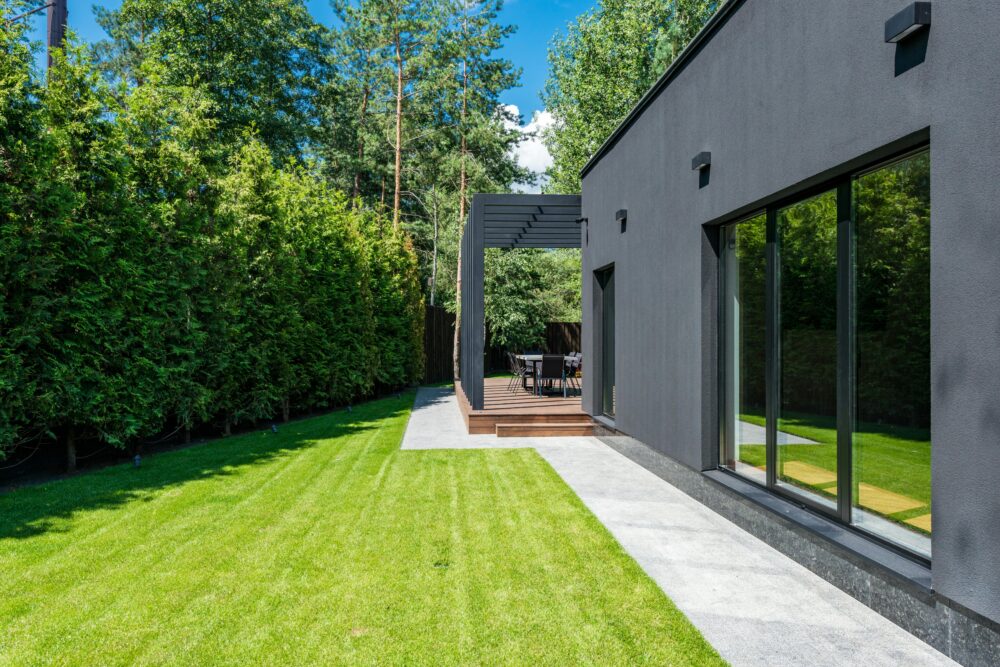
There’s something challenging, yet oddly exciting, about working with a compact outdoor space. Sure, a small yard doesn’t offer endless possibilities, but it does demand creativity and clever thinking. What makes the difference between a cramped, disappointing backyard and a cozy outdoor oasis? It’s all about strategic design choices that play tricks on the eye while maximizing every inch you’ve got. With the right approach, even the tiniest plot can feel surprisingly spacious and welcoming.
Create Vertical Interest with Layered Plantings
Here’s a simple truth: when ground space is limited, it’s time to think upward. Drawing the eye skyward instantly makes any small yard feel less confined and more dynamic. Tall ornamental grasses swaying in the breeze, climbing vines weaving their way up decorative trellises, or slender trees with columnar growth habits, these vertical elements shift attention away from horizontal boundaries that might otherwise feel restrictive. Vertical gardens and living walls are particularly brilliant solutions because they pack serious visual punch without eating up precious floor space.
Utilize Strategic Color Schemes and Lighting
Color isn’t just about aesthetics; it’s a powerful tool for manipulating how we perceive space. Lighter colors naturally recede, opening up areas and making them feel airier, while darker tones tend to advance and close things in. Painting your fence, walls, or garden structures in soft neutrals like warm cream, gentle gray, or sky-pale blue helps push visual boundaries outward while bouncing more natural light around your yard. When it comes to plants, think strategically about placement.
Implement Defined Zones with Purpose
Instead of treating your small yard as one continuous, limited space, what if you divided it into distinct functional areas? This “outdoor room” concept is remarkably effective at creating the perception of more square footage. By carving out separate zones for different activities, dining here, lounging there, maybe a small garden area in another spot, you’re essentially telling the brain that it’s navigating a more complex, larger environment. The trick is creating these divisions without blocking sightlines completely. Subtle transitions work best: perhaps a change in paving material, a low decorative hedge, or an airy screen that suggests separation while maintaining visual flow across the yard.
Choose Furniture and Features at Appropriate Scale
Nothing makes a small yard feel smaller faster than cramming in oversized furniture or bulky features that dominate the entire space. Scale matters tremendously and choosing pieces that are proportional to your yard ensures you’ll have comfortable seating and gathering areas without that claustrophobic, overcrowded feeling. Multi-functional furniture is your friend here, think storage benches that double as seating, fold-down tables that disappear when not needed, or nesting chairs that tuck away neatly. Built-in seating along fences or property borders can be particularly smart, maximizing usable space without adding freestanding elements that eat up precious square footage.
Blur Boundaries with Strategic Planting
One of the most effective tricks for expanding perceived space? Making people unsure about where your property actually ends. Softening those hard boundary lines, whether they’re fences, walls, or hedges, reduces the sense of being boxed in and makes the yard feel more open and connected to its surroundings. Layered planting along property lines works beautifully for this, with varying heights creating a gradual visual fade rather than an abrupt stopping point. Plants with fine or airy textures near borders are particularly effective because they create that soft, blurred edge that tricks the eye into imagining more space beyond what’s technically there. For homeowners who want consistent visual appeal without spending every weekend on maintenance, artificial grass provides a solution that looks great year, round while freeing up time and energy for other design elements. Letting plants spill over pathways and edges adds organic softness while disguising the true boundaries of your space. If you’ve got an attractive tree in a neighbor’s yard or a pleasant natural view beyond your property line, incorporate that borrowed scenery into your design by framing it intentionally. And here’s a bold option when used thoughtfully. Strategically placed mirrors in protected outdoor spots can double the perceived size of certain areas by reflecting plantings and creating the illusion of depth where none exists.
Conclusion
Transforming a small yard into something that feels genuinely spacious isn’t about waving a magic wand; it’s about understanding how visual perception works and using that knowledge to your advantage. By incorporating vertical elements that draw the eye upward, employing color schemes that expand perceived boundaries, dividing your space into distinct zones, selecting appropriately scaled furniture, and softening property lines with strategic planning, you can completely change how your outdoor space feels. The most successful compact yards don’t try to hide their size; they embrace it while cleverly employing illusions that expand perceived space beyond physical reality. With thoughtful planning and attention to these time, tested design principles, even the most modest outdoor area can become a beautiful, functional retreat that surprises visitors and delights residents throughout every season.