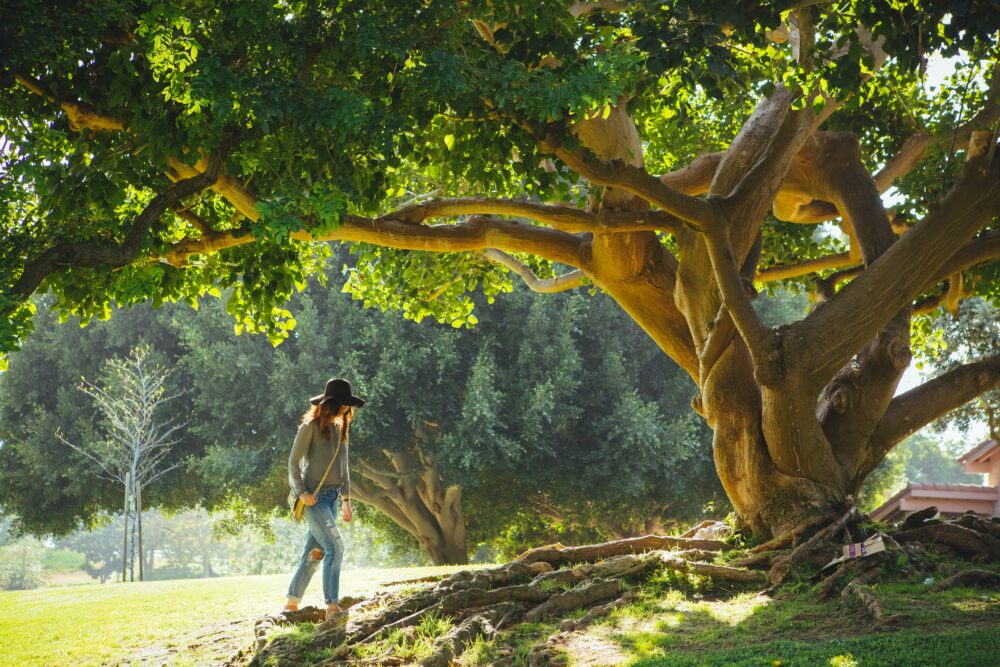
Mature trees can develop serious structural problems long before they fall or shed a large branch. Regular checks help you spot tree hazards early, especially after heavy rain, high winds or nearby construction.
Some warning signs call for routine maintenance, while others require an immediate safety response. Keep people away from the affected area and look for these five signs that a tree may pose an urgent hazard.
Deep Trunk Cracks and Cavities
A deep crack can show that the trunk is separating under the weight of the canopy. Vertical splits extending into the wood, cracks between two main stems and fresh openings that appear after a storm deserve prompt attention. Cavities are another warning sign because decay may remove supportive wood while leaving the outer trunk looking relatively intact.
Avoid inserting tools into an opening or trying to fill it yourself. Photograph the damage from a safe distance and note any recent changes. If the crack is widening, making noise or located above a home or walkway, arrange for tree services and restrict access beneath the canopy until the tree has been assessed.
Soil Heaving Around the Base
Raised, cracked or newly disturbed soil on one side of a tree can indicate that its root plate is shifting. You may also notice exposed roots, a growing gap between the trunk and soil or a lean that wasn’t present before. Saturated ground increases concern because wet soil may offer less support.
Treat visible soil heaving as urgent, particularly when the tree could reach a building, road or play area. Don’t walk close to the base to inspect it. Keep people and pets outside the tree’s potential fall zone, which may extend at least as far as its height, and contact a qualified arborist. A suddenly leaning tree should never be straightened with ropes or a vehicle.
Dead Limbs Caught in the Canopy
A dead branch may remain lodged among healthy limbs for weeks before dropping without warning. Missing bark, dry twigs, fungal growth and branches that produce no leaves during the growing season can all point to dead wood. Hanging limbs with torn fibers are especially unstable after wind or rain.
Check the canopy from ground level and use binoculars if necessary. Never stand beneath a suspended branch or shake lower limbs to dislodge it. Move vehicles, outdoor furniture and play equipment away from the drop zone. When a dead limb hangs over a roof, driveway or utility line, leave removal to trained workers who can control how it comes down.
Booking Professional Tree Services
Book an inspection when you see structural damage, root movement, large dead branches or a recent change in the tree’s angle. When calling, explain the tree’s approximate size, its distance from buildings and what changed. Clear photos can help the provider judge urgency, though they don’t replace an on-site assessment.
Ask whether the arborist has suitable insurance, relevant qualifications and a written plan for the work. The International Society of Arboriculture explains how professional credentials support proper tree care and risk assessment. For immediate danger, such as active root lifting or falling material, keep the area closed while waiting for help. Don’t attempt climbing, high cutting or removal without the proper training and equipment.
Protecting Structures Before Storms
A fifth warning sign is a newly tilted trunk or major limb that has moved closer to a roof, fence or overhead line. Before severe weather arrives, check from a safe position for fresh leaning, broken unions and branches touching vulnerable structures. Trim small shrubs if they block your view, but don’t cut into the hazardous tree.
Move portable items such as grills, chairs and toys indoors. Park vehicles beyond the tree’s full height if space allows and close off nearby doors or paths. If branches are near utility lines, contact the utility provider instead of an independent worker. Once the storm has passed, wait until daylight to inspect the area and watch for suspended limbs overhead. A widening trunk crack or lifted root plate means the exclusion zone should remain in place until an arborist arrives.
Image Credit: Unsplash