A good steak doesn’t need much help, but a few smart choices can turn it into the kind of dinner you keep thinking about the next day. You don’t need restaurant equipment or a complicated technique either.
If your steaks sometimes come out fine but never quite amazing, don’t overhaul everything at once. Focus on the small details that build flavor and improve texture. Once you get those down, you can start playing with sauces, butter, smoke, and side dishes without losing the steak itself in the process. Continue reading to explore the ways to take your steak from good to incredible.
Get the Right Cut
You don’t need the most expensive steak in the case, but you do need a cut that matches the experience you want. Ribeye gives you rich marbling and a buttery texture, while strip steak offers a firmer bite with plenty of beefy flavor.
Filet mignon brings tenderness, but it doesn’t carry as much fat or bold flavor as ribeye or strip. Sirloin costs less and still delivers a satisfying steak dinner when you cook it carefully. Look for visible marbling throughout the meat instead of large pieces of fat concentrated around the edges. Those thin streaks help keep the steak flavorful as it cooks.
Salt Earlier Than You Think
If you only change one thing, start salting your steak earlier. Salt helps season the meat beyond the surface and supports better browning once the steak hits the pan or grill. Season the steak at least 40 minutes before cooking when you have the time.
For even better results, salt it several hours ahead and leave it uncovered in the refrigerator. That approach also helps dry the surface. A drier exterior develops a deeper crust, which adds contrast to the juicy center.
Dry the Surface
Moisture works against browning, so grab a paper towel before you season or cook your steak. Pat both sides thoroughly until the surface feels dry. This step sounds small, but it can make a major difference.
A wet steak steams before it browns, and that delay can leave you with a pale exterior or an overcooked center. Dry meat gives the hot pan or grill a better chance to build the dark, flavorful crust you want.
Use Enough Heat
Don’t be shy with heat. Steaks benefit from a properly heated pan or grill because high temperatures create better browning before the interior cooks too far.
If you use a skillet, choose one that holds heat well. Cast iron works beautifully, but a heavy stainless-steel pan can also give you a strong sear. Heat the pan before the steak goes in. You want that immediate sizzle when the meat touches the surface.
Choose the Right Fat
Butter tastes great, but it can burn when you use it at the beginning of a hard sear. Start with an oil that handles higher heat, then bring butter in later. Avocado oil, refined olive oil, or another high-heat cooking oil can help you build the crust without filling the kitchen with burnt milk solids.
Once the steak develops color and the heat comes down slightly, add butter for flavor. That gives you the best of both worlds.
Baste for More Flavor
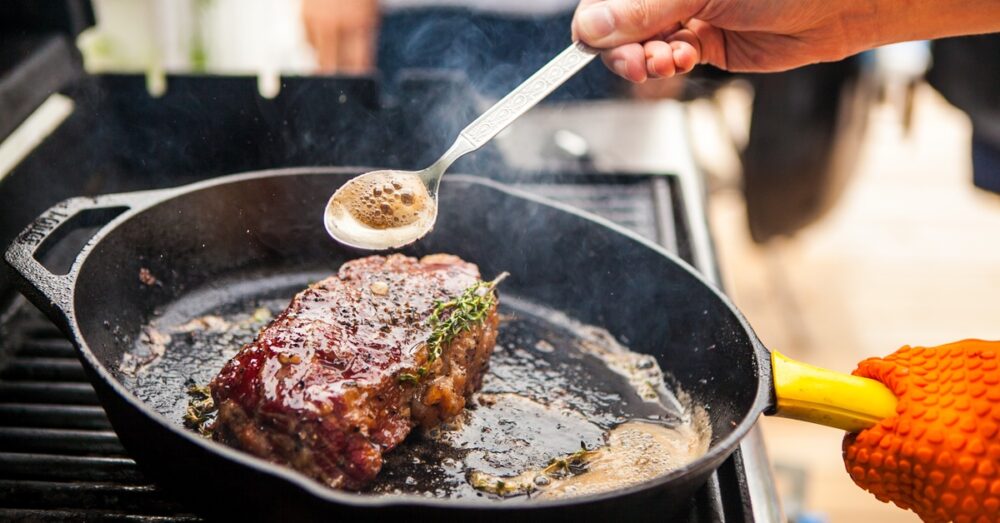
Once you get a good sear, add butter, garlic, and a sturdy herb such as thyme or rosemary to the pan. Tilt the skillet slightly, spoon the foaming butter over the steak, and keep basting for a short time. You don’t need to drown the meat. A few spoonfuls can add richness and carry the garlic and herb flavors across the surface.
If you want to switch things up, use your favorite compound butter recipe and place a small slice on the steak right after cooking. The butter will melt over the hot surface and create an easy finishing sauce.
Use a Thermometer
Guessing doneness by touch looks impressive until you miss your target. A reliable instant-read thermometer gives you much better control, especially with thick steaks.
Check the center from the side when possible so you can reach the thickest section. Pull the steak a few degrees before your preferred final temperature because the meat will continue warming as it rests. This tool takes the stress out of cooking expensive cuts. You can focus on the crust and flavor without wondering what happens inside.
Let It Rest
Don’t cut into the steak the second it leaves the heat. Give it a few minutes to rest so the juices can redistribute through the meat. A smaller steak may only need five minutes, while a thick cut can benefit from a little longer. Set the steak on a warm plate or board, leave it alone, and use the time to finish your sides or sauce.
Finish With Texture
A final touch of salt can make a steak taste more complete. Try a flaky finishing salt right before serving. That extra crunch gives each bite a little contrast without overwhelming the beef. You can also add freshly ground black pepper at the end if you want a more noticeable pepper flavor without risking burnt pepper during the sear.
Keep the finish restrained. You want to highlight the steak rather than bury it under seasoning.
Add a Simple Sauce
A great steak doesn’t need sauce, but the right one can make dinner feel special. Keep it simple enough that the beef still leads the plate. A quick pan sauce with shallots, stock, wine, or cream can work well. Chimichurri brings freshness and acidity, while a peppercorn sauce adds richness.
You can also spoon the leftover garlic butter from the pan over the sliced steak. Sometimes that small move gives you all the extra flavor you need.
Slice Against the Grain
When you serve larger cuts such as flank steak, skirt steak, or tri-tip, slicing technique can change the way the meat feels when you chew it. Look at the direction of the muscle fibers before cutting.
Slice across those fibers rather than along them. Shorter fibers create a more tender bite and make even leaner cuts easier to enjoy.
Use a sharp knife and take your time. Clean slices also make the steak look more appealing on the plate.
Make Steak Night Worth It
Taking a steak from good to incredible usually comes down to attention rather than complexity. Salt it early, dry the surface, use enough heat, check the temperature, let it rest, and finish it with something that adds flavor without hiding the beef.
After that, have fun with it. Try different cuts, experiment with herbs, switch up your finishing butter, or test a new pan sauce. The more you cook steak with intention, the easier it becomes to create a dinner that feels special without turning the whole process into a production.